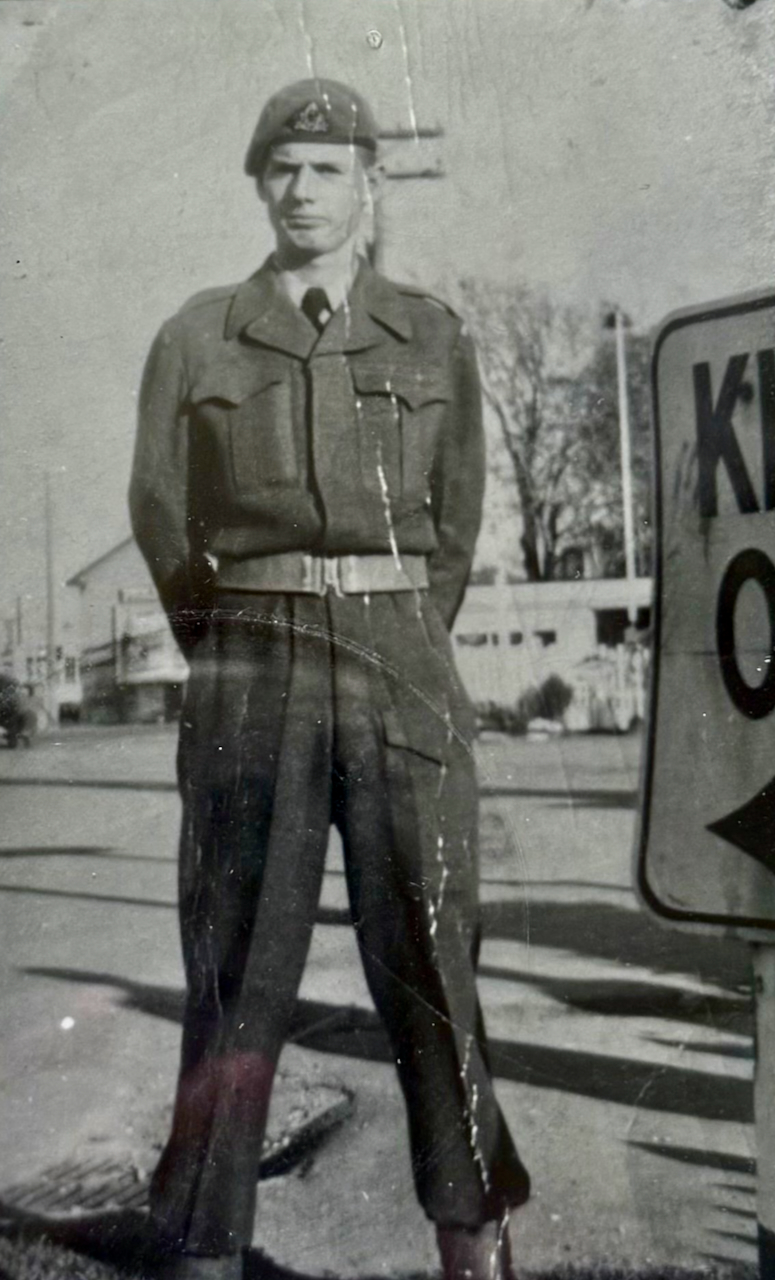
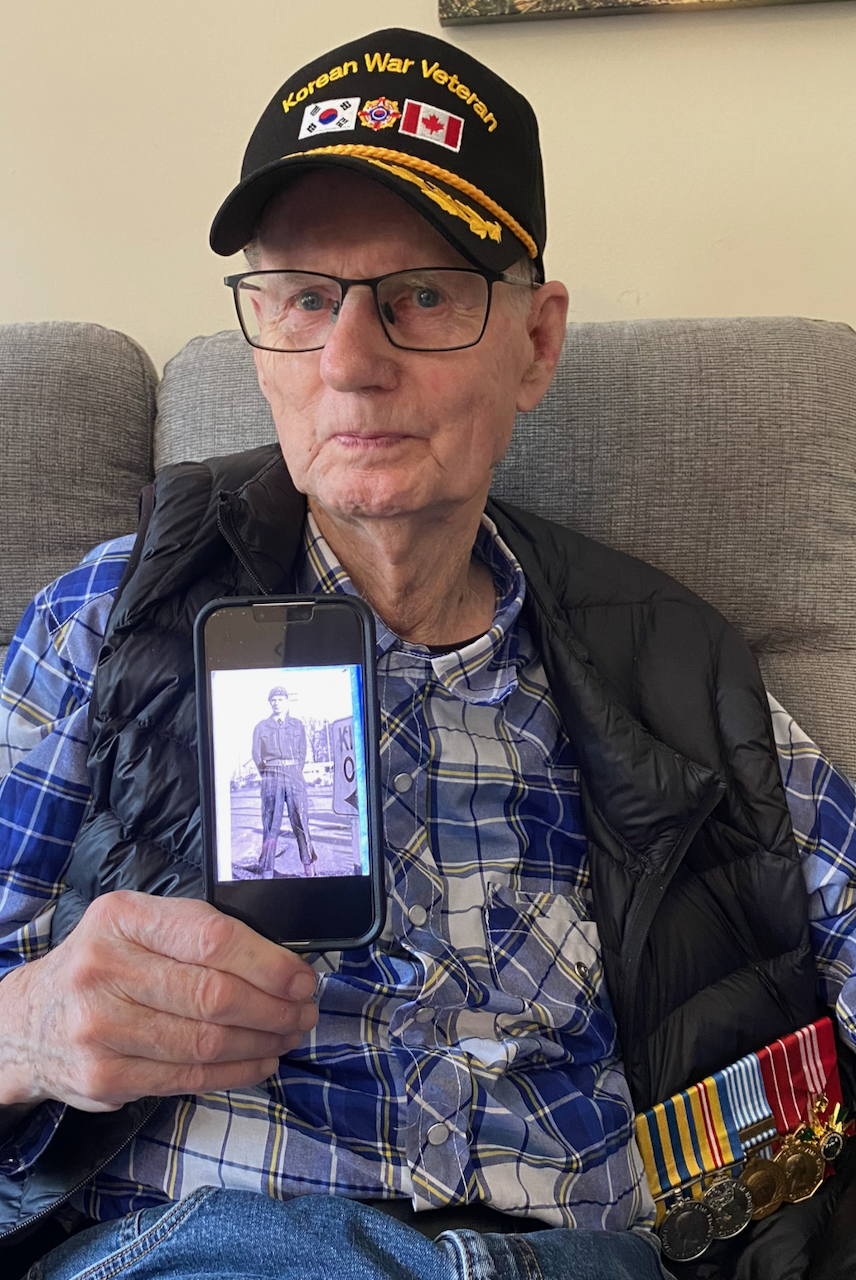
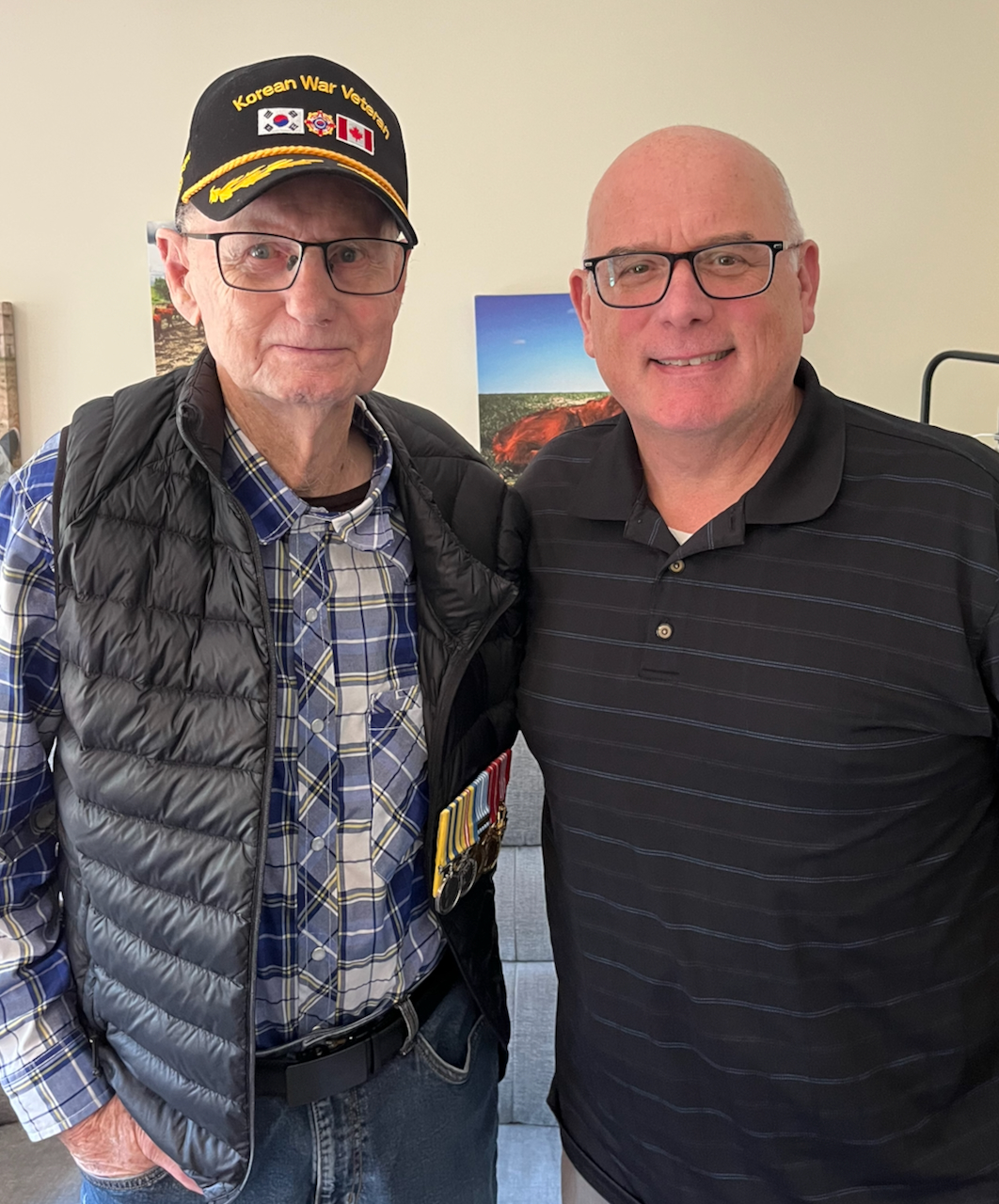
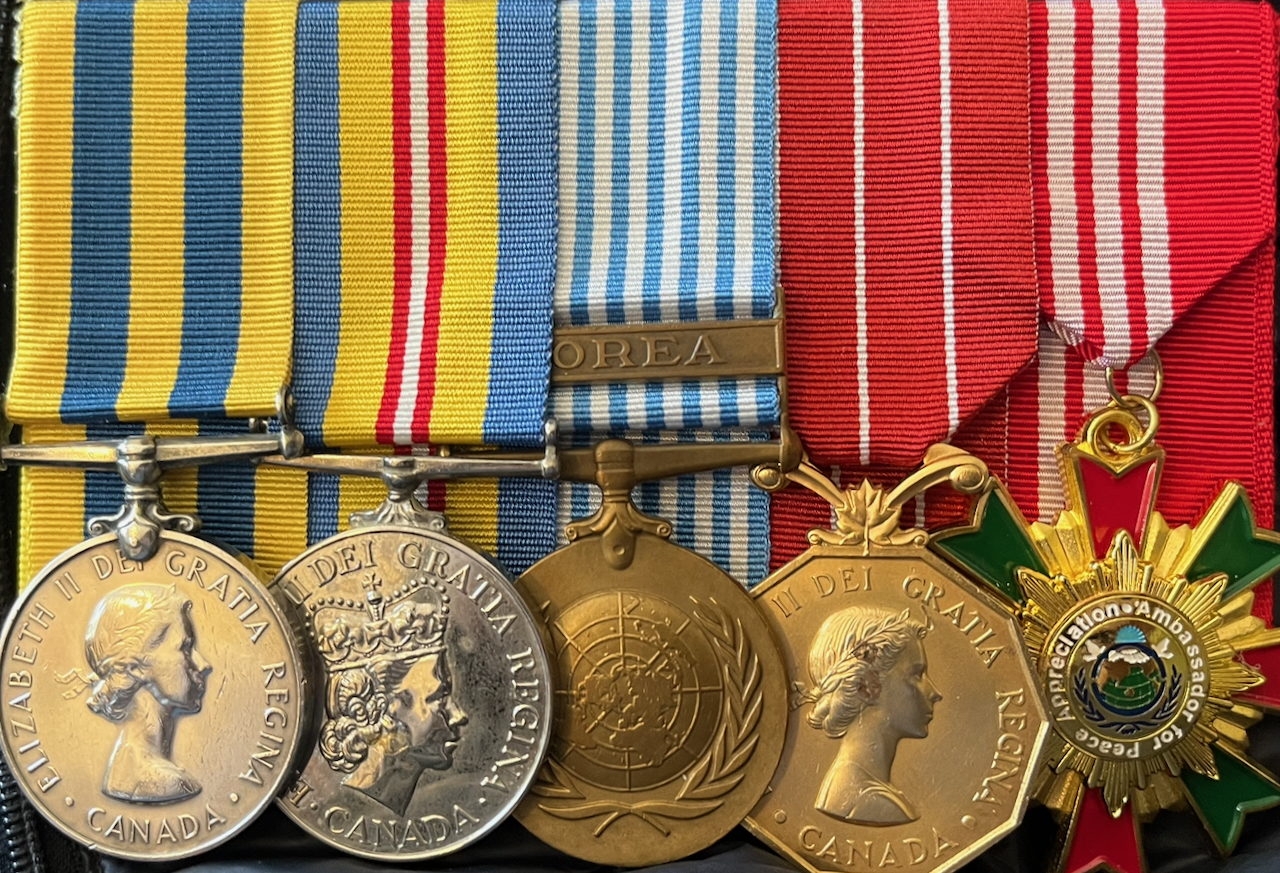
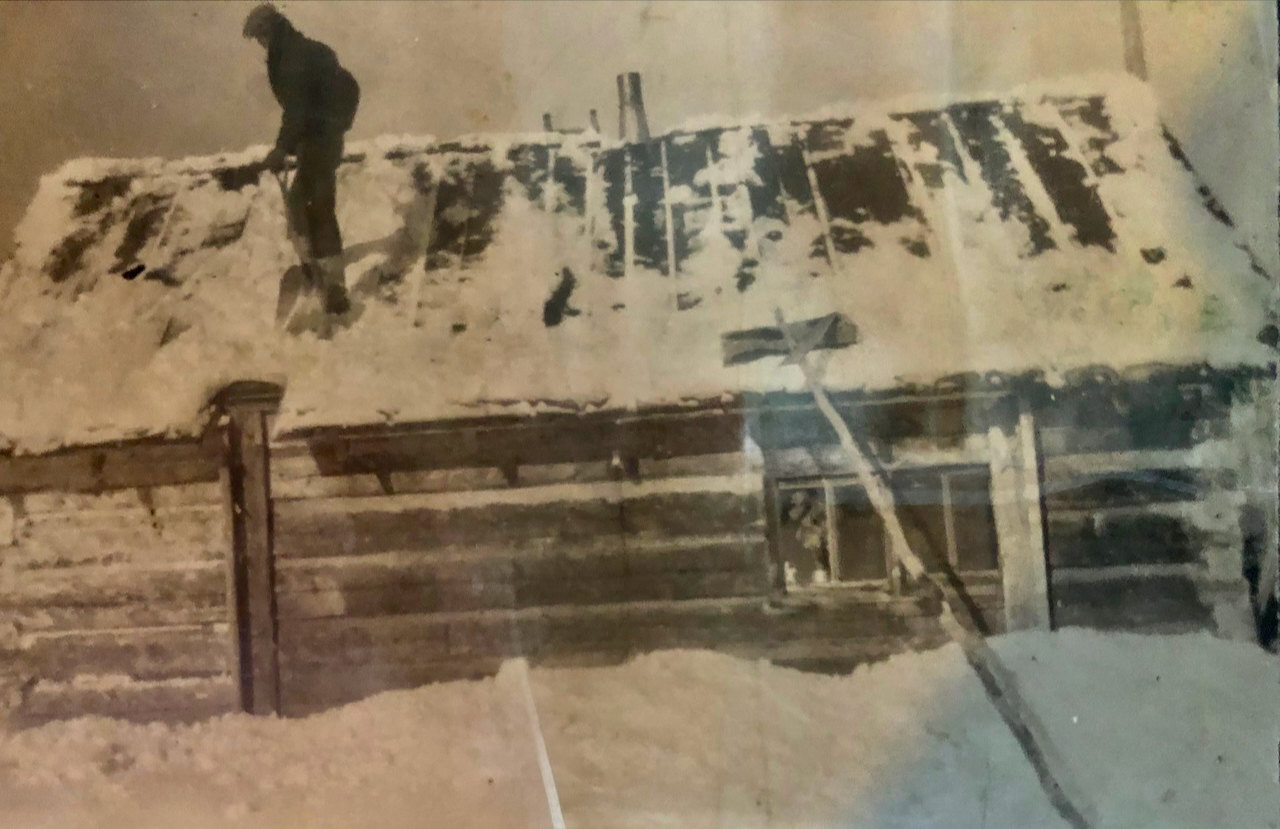
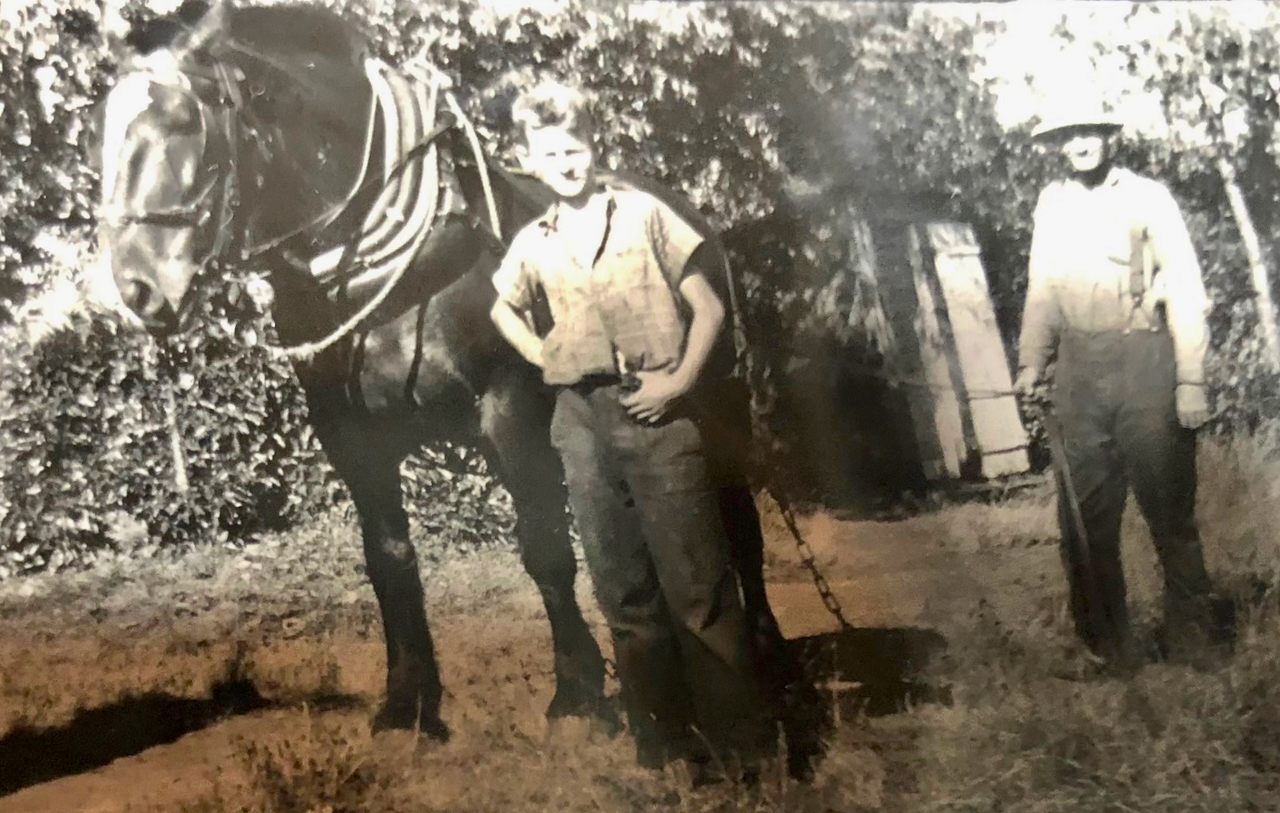
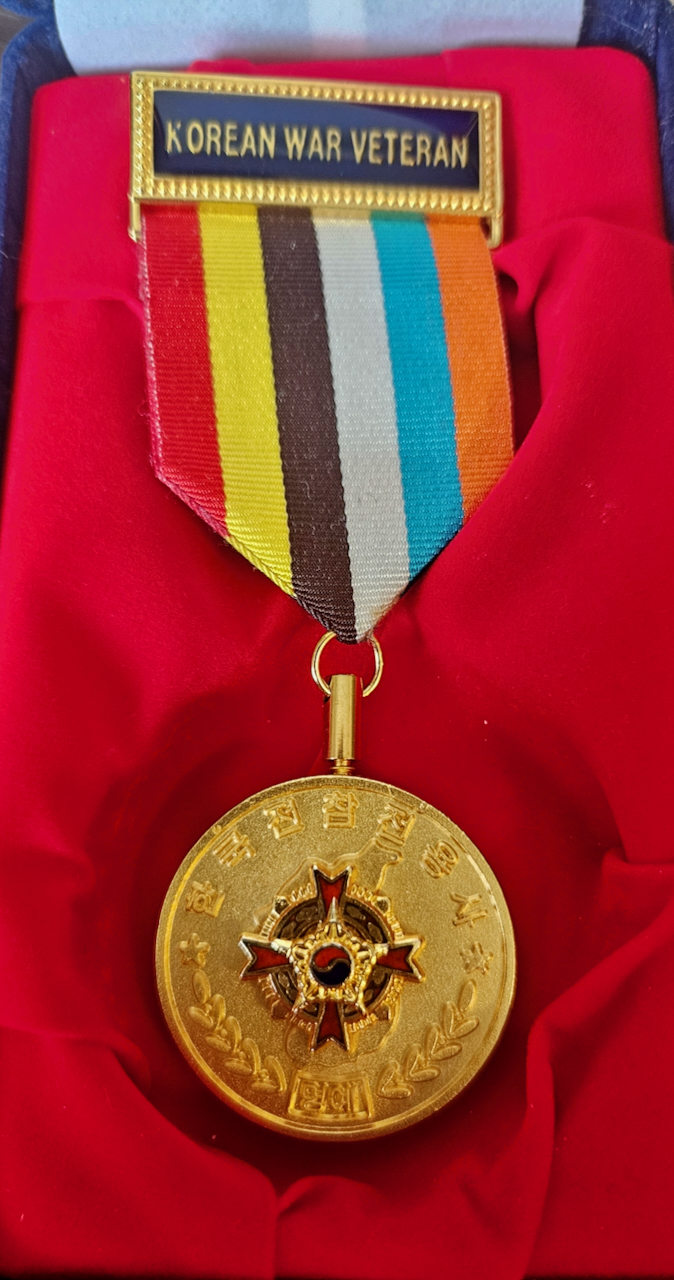
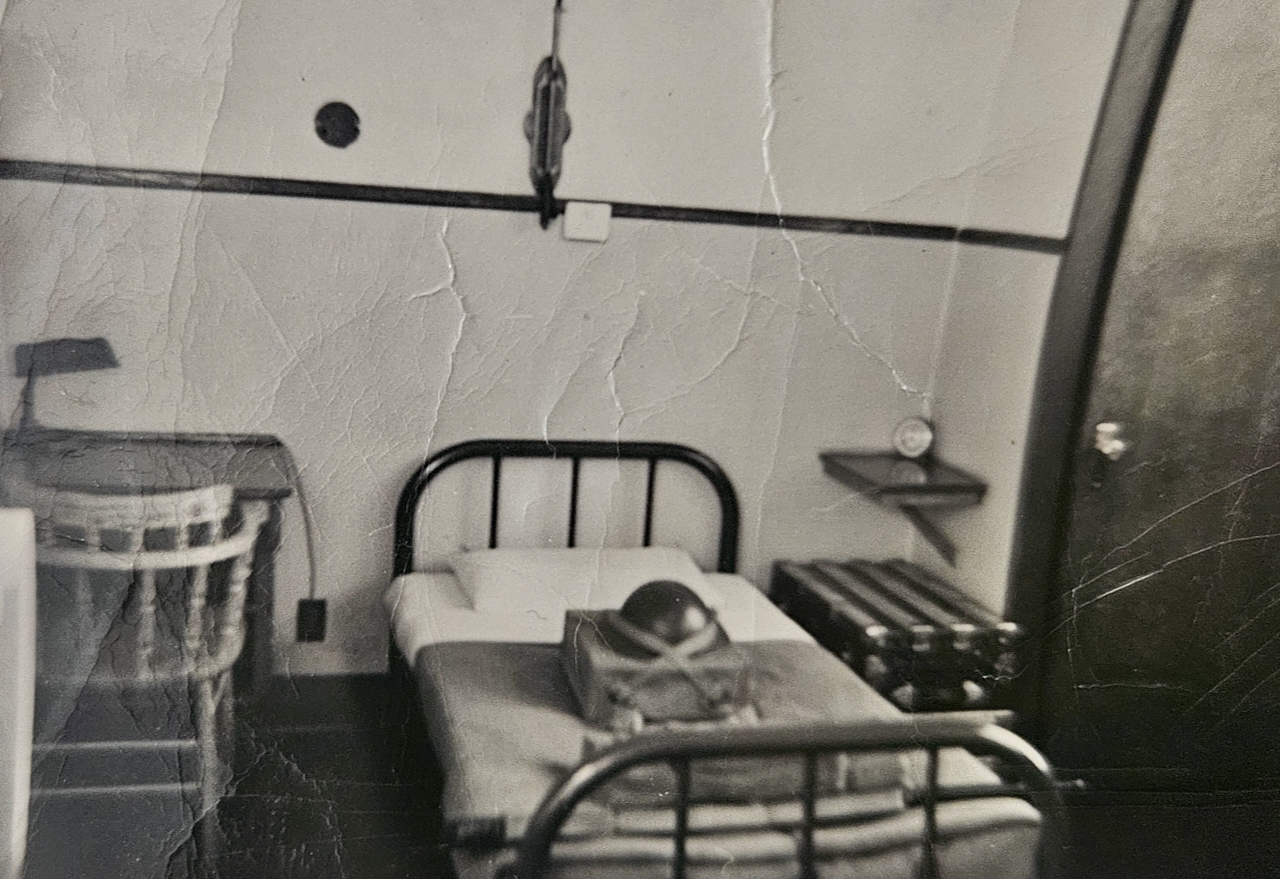
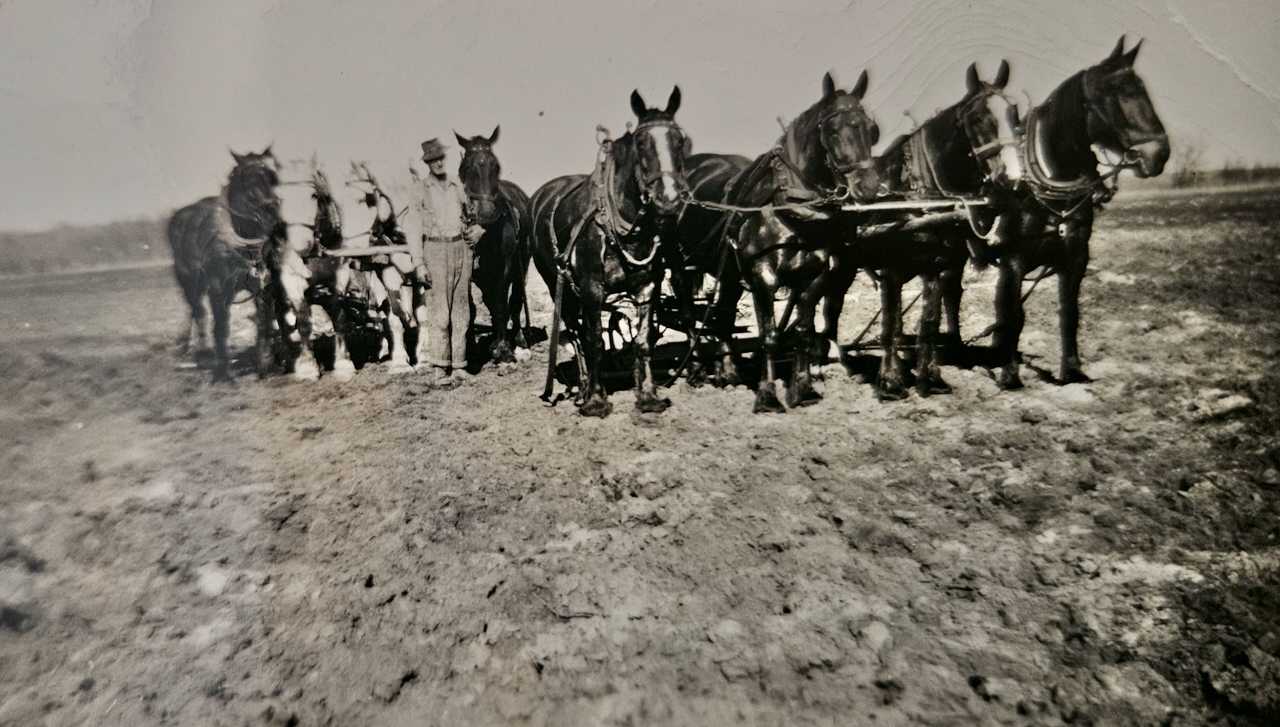
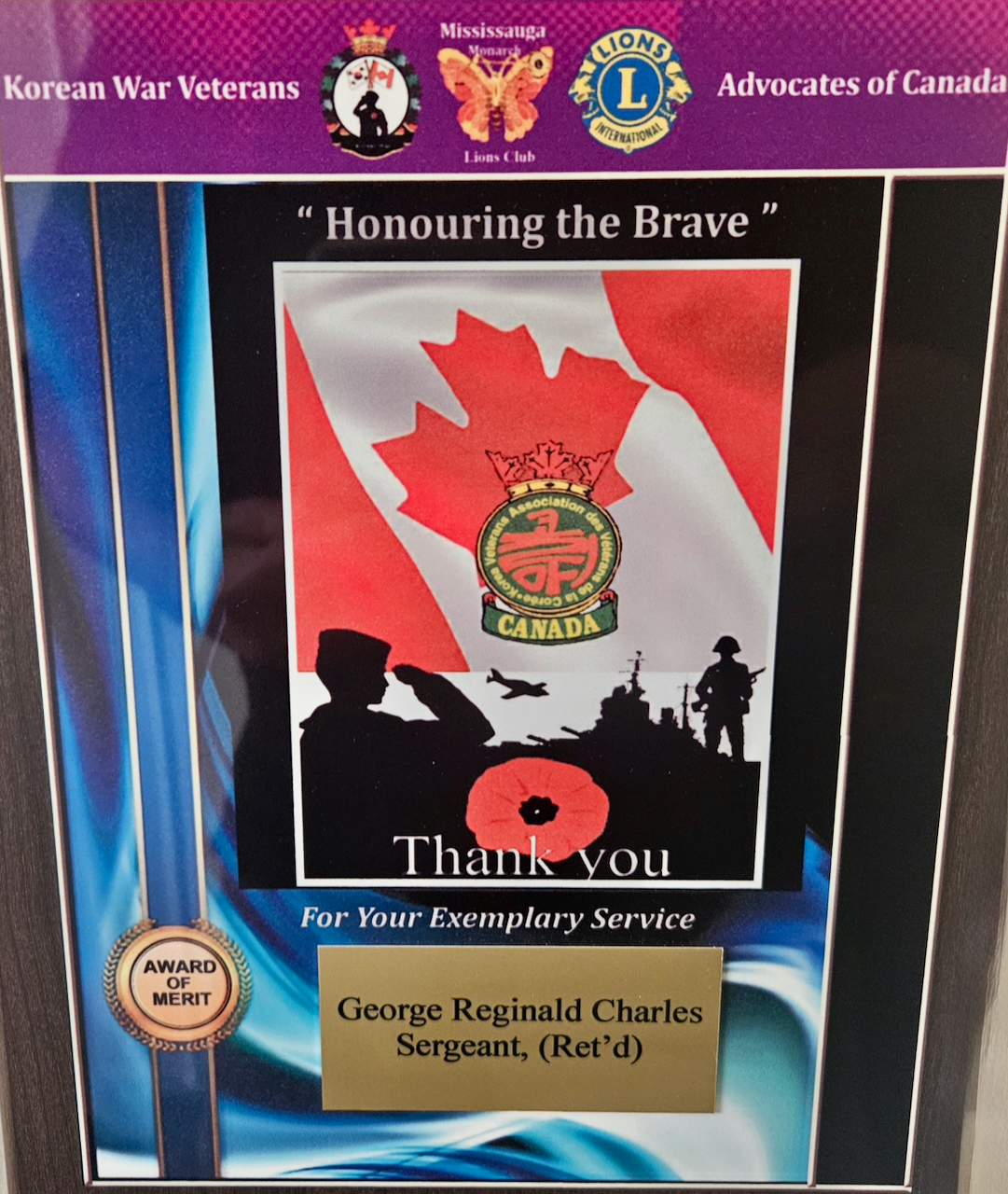
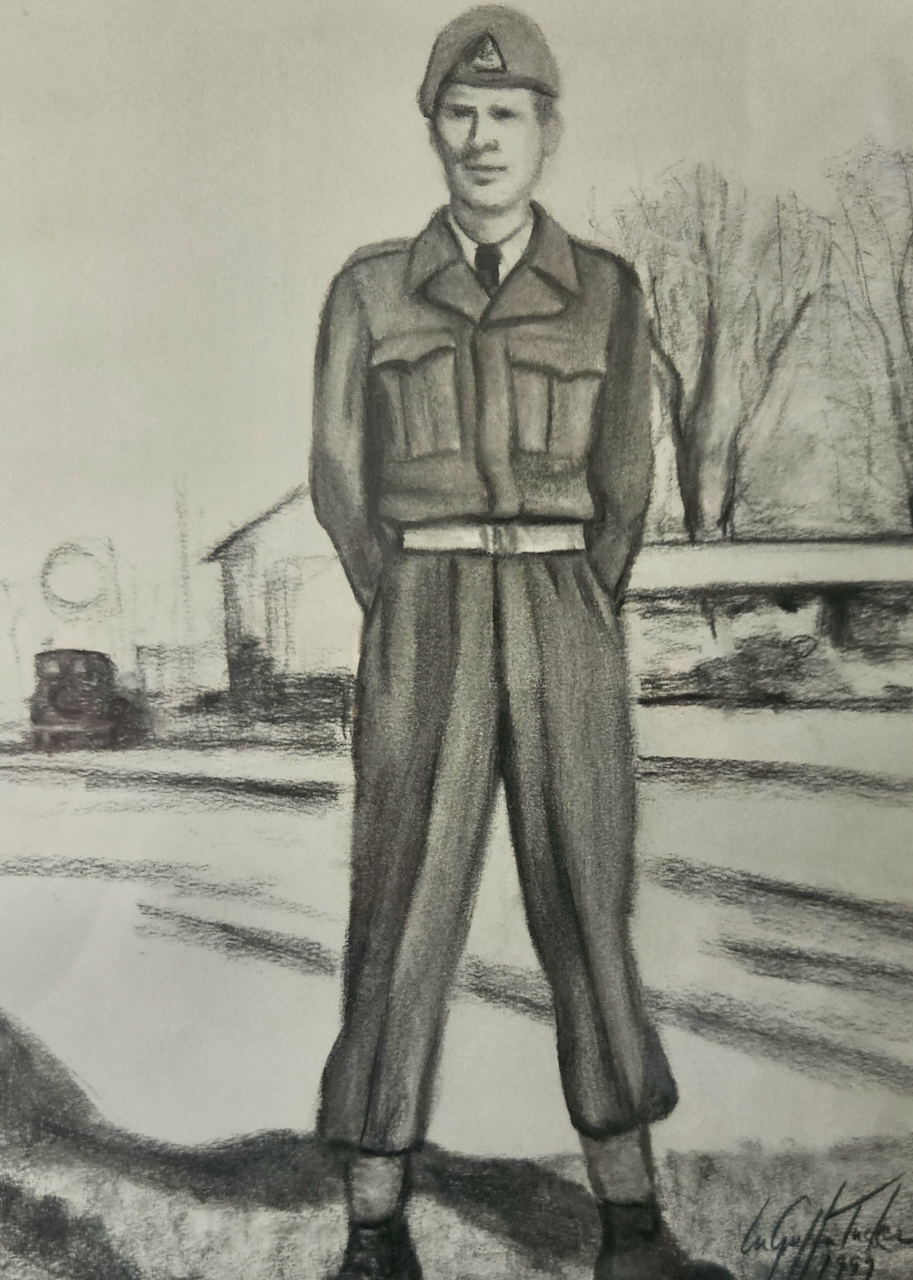
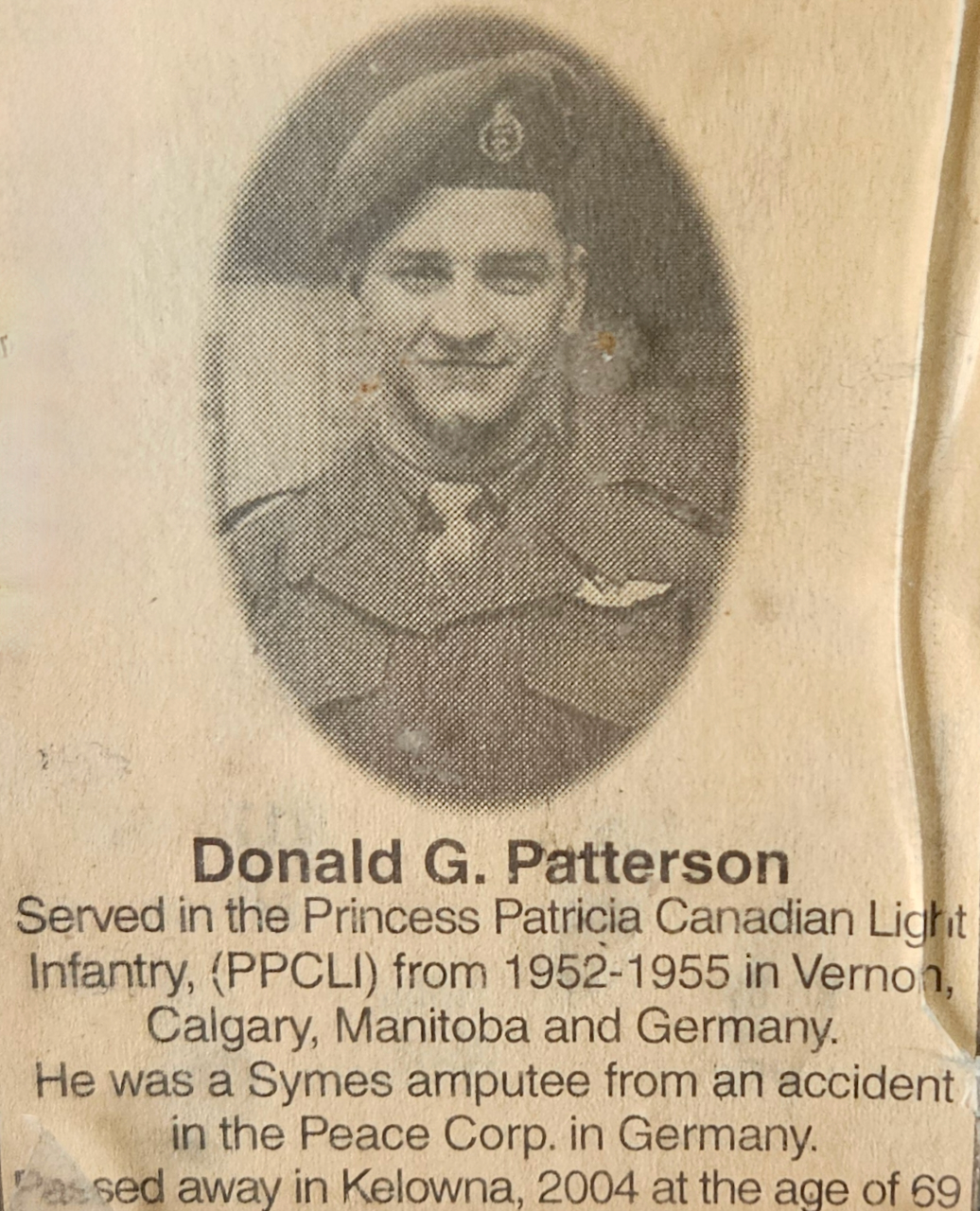
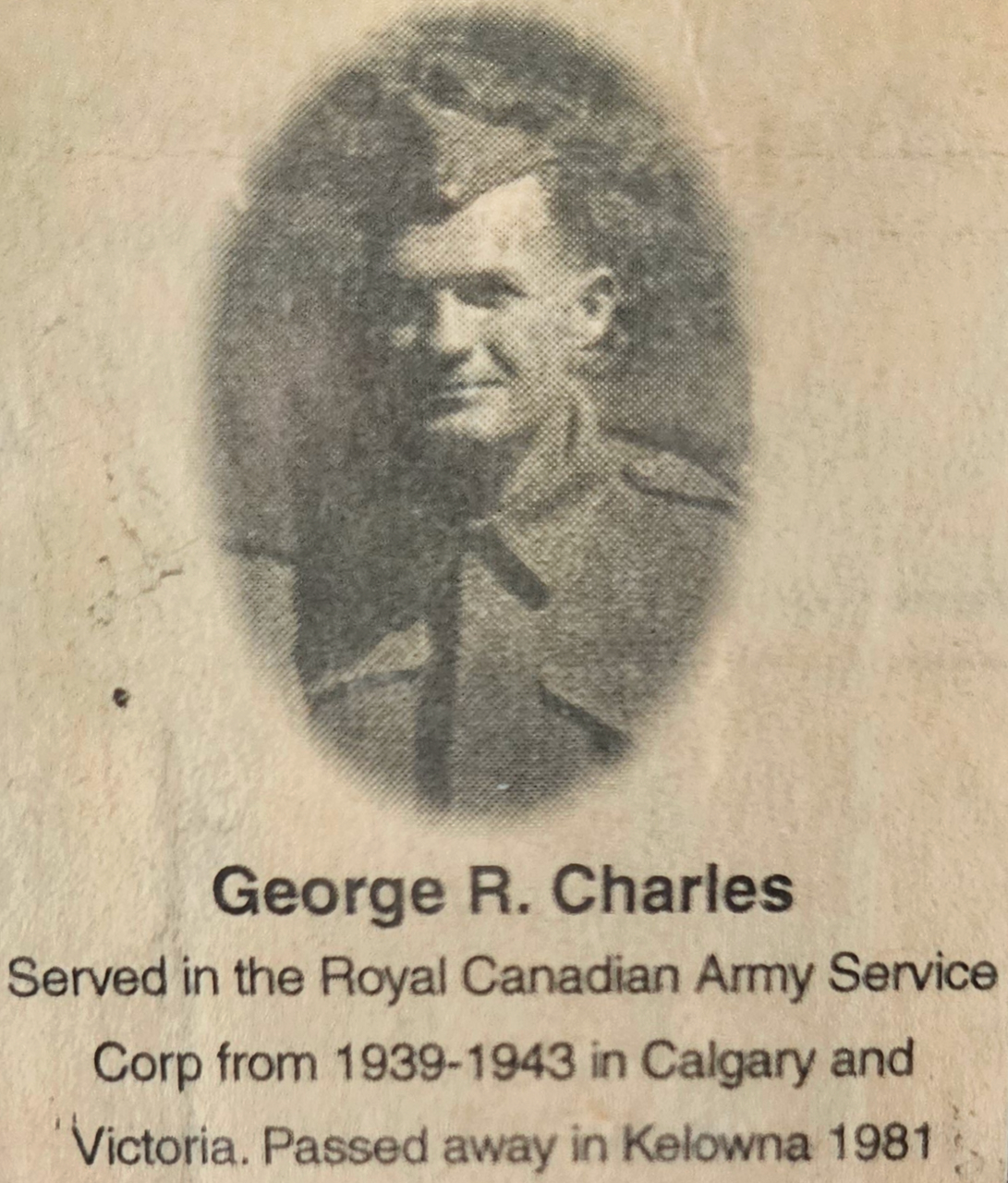
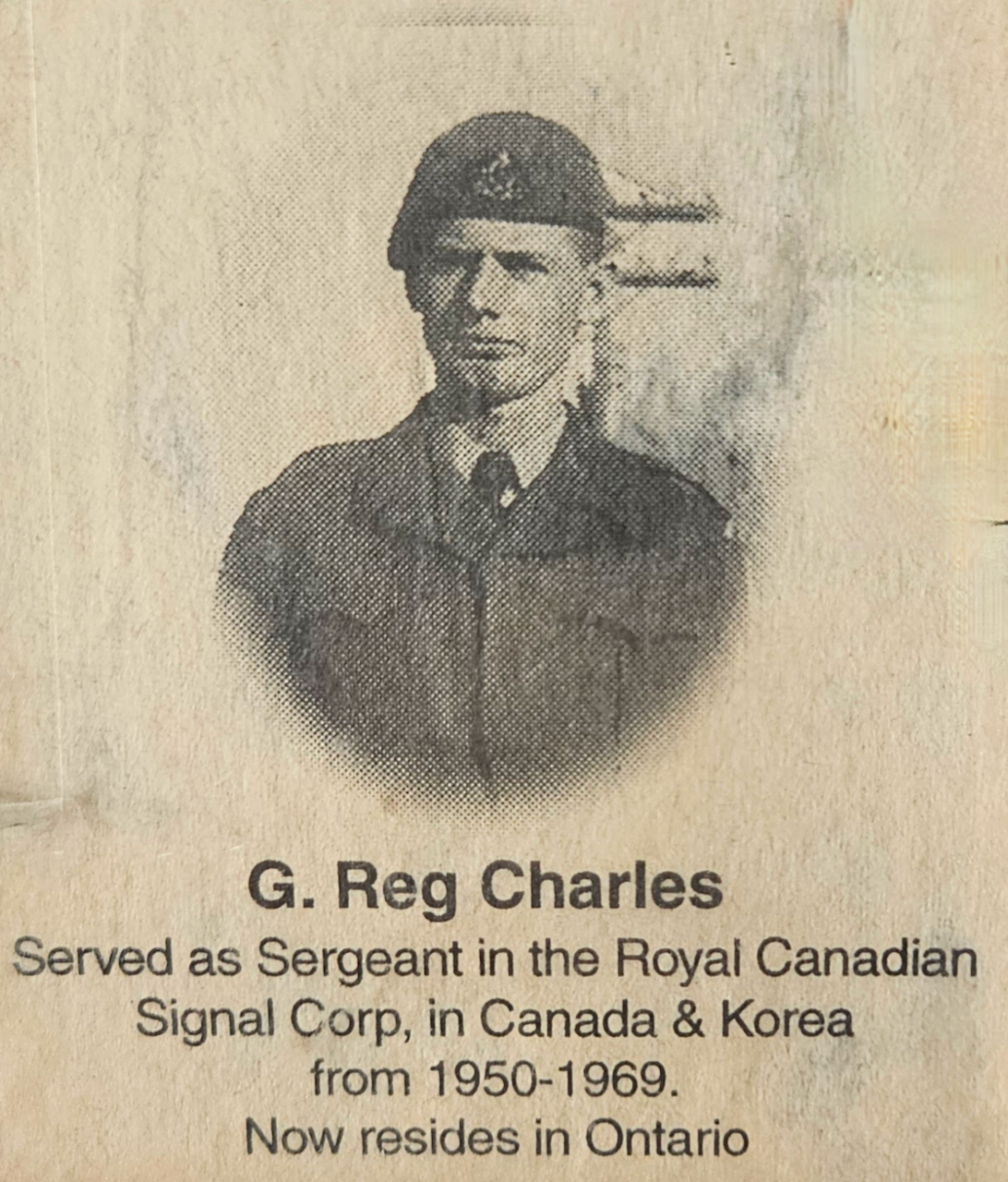
George Charles was born December 20, 1932 in Berwyn, Alberta. He grew up on a homestead there alongside his five siblings, in the Peace River country in the northern reaches of the province. When World War Two came, George’s father joined the military, where he served in the Royal Canadian Service Corps as a trucker/mechanic. The family relocated to White Rock, B.C. during this time, and George recalls delivering newspapers in that rural community late in the war. Once the war was over, the family moved back to northern Alberta in 1947, taking over a section of land via the Veterans’ Land Act. George left school after Grade 9 and worked for a time and when he was 17 he opted to join the army – just as the Korean War was beginning in the summer of 1950. He was sent to Kingston, Ontario where he was assigned to the Royal Canadian Signal Corps. That specialized trades training took some time, so George didn’t deploy until 1951, when he was attached to the Royal Canadian Horse Artillery – though he ended up going over as part of the 25th CIBG. He transited via Seattle to Yokohama, spending several months in Japan before heading to Korea and landing at Pusan. From there he was shipped north to Cheorwon, where he served in the brigade headquarters at first. As a signaller George served in different regiments, including the RCRs, the PPCLI and the Van Doos. What George saw in Korea impacted him deeply, and he very much has taken up an antiwar viewpoint based on his experiences. George returned to Canada after a year and a day – it happened to be Queen Elizabeth’s coronation day – and he chose to become a career soldier, spending the next 20 years in the Canadian Forces. It took time to adjust to the new realities of Canada, but George did, finding his way into the rhythms of postwar life. George was interviewed for this project at his home in Stoney Creek, Ontario by Zach Dunn and Scott Masters in May 2026.
Videos
Click next video below to keep watching